
Real Thoughts
Personal insights from our team
Consumers distrust AI, especially in marketing. Now what?

Greg Iszler
VP, Experience Strategy
While marketers and their agencies are scrambling attention (and resources) to AI, the real influencer of consumer connection, trust, is often overlooked. This creates a major strain in the marketer-consumer relationship.
Trust in marketing has been dwindling for years, but decisions marketers are making in the AI age are eroding consumer confidence at an accelerated rate. Gallup’s July 2026 research found that average confidence in major U.S. institutions remained below 30% for the fifth consecutive year while confidence in large technology companies fell to a new low of 20%.
While AI didn’t create the gap on its own, it’s amplifying it.
Generating content faster, cheaper and more prolifically isn’t what earns customers
Simply put, consumers and marketers are at odds with embracing AI. Canva’s 2026 State of Marketing & AI study found that 97% of marketing leaders now use AI in their daily creative work, with 99% expecting to increase their AI use. Yet 70% of consumers said they recognize AI-generated advertising because it feels off. Another 87% of consumers said good advertising requires a human touch.
While marketers are embracing AI (often lazily), consumers have noticed and are reacting poorly.
The term “AI slop” illustrates the tension. Using the word “slop” to describe AI content, including marketing, has been commonplace since the AI boom. The term is so popular Merriam-Webster made “slop” its 2025 Word of the Year.
Where are trust gaps for your competitors?
Recent research analyzing 25 million online comments found that accusations of AI slop have increased more than tenfold, and they’re as powerful as ever. The negative feedback has become a PR nightmare for brands, especially when the slop undermines a company’s existing reputation and values.
Take REI’s recent controversy, for example. The company has long held a reputation for being transparent and honest; however, a June 2026 slop scandal caused an uproar (see image below). For a week, REI accidentally served a slop ad when Meta’s Ad Server altered their non-AI ad photo without the brand noticing. Even though Meta took the blame, REI took the heat and their trustworthy reputation took the biggest hit.
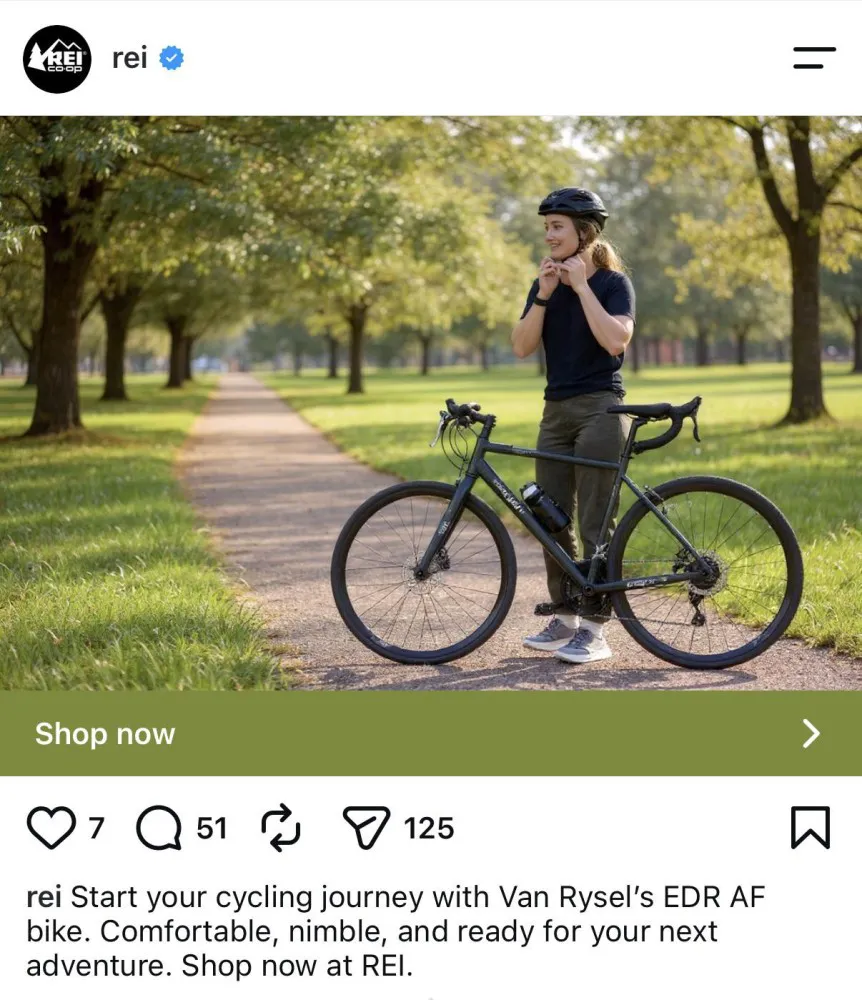
So even if companies don’t use AI for their marketing endeavors, they could find themselves in the hot seat by failing to double-check if their marketing is being properly represented. Lazy marketing isn’t forgiven in the current landscape of distrust; it is at risk of being declared “slop” and further eroding trust.
How will your brand close the trust gap?
So how can brands help alleviate consumer frustration and combat distrust? The first step is disclosure. Nobody likes to feel tricked. Marketers are responsible for closing the gap between their AI excitement and consumers’ AI fatigue. They should reevaluate their policies around AI and focus their efforts on rebuilding trust.
In fact, Usercentrics found that 52% of consumers would pay more for brands that are transparent about AI, while 47% had already canceled, switched or reduced spending because of concerns about how brands used AI and personal data.
Without authenticity and trust, consumers are likely to tune out marketing altogether. Wise marketers can use this insight to their advantage. It’s the perfect time to turn toward human-designed creative work. The market is craving authenticity; brands that prove it will stand out favorably.
With AI, marketing seems to change faster than ever before. But in this era, it’s not about who adapts new tech first; it’s about who uses new technology ethically and honestly.
Greg Iszler is the VP of Experience Strategy at REGROUP and serves as our Marketing and Technology SME.